Fix Scale Infestation on Money Tree: Organic Treatment & Prevention Tips
Finding a white, crusty substance on the trunk of your beloved Money Tree can be an alarming experience. This often mysterious buildup is typically identified as scale, a common sap-sucking insect that treats your indoor investment like a personal buffet. Understanding the nature of this pest is the critical first step in restoring your plant's health and protecting your investment.
Identifying Scale on Your Money Tree
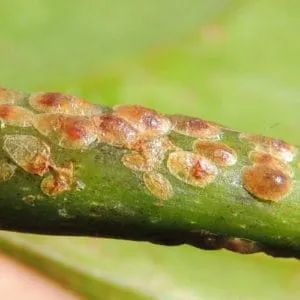
Scale insects are masters of disguise, and recognizing them is crucial for effective treatment. They appear as small, round, or oval bumps that resemble spots of armor firmly attached to the stems and leaves. While some varieties are white or gray, others can be brown, black, or even pink, and they often have a shiny, waxy coating that gives them a shell-like appearance.
Differentiating Scale from Other Issues
It is easy to confuse scale with mineral deposits or simple dust, but a closer inspection reveals the truth. If you scrape the bump gently with a fingernail and it moves as a single unit, revealing a soft body underneath or a plugged hole, you are dealing with scale. Unlike mineral spots, which wipe away easily, scale insects are deeply embedded in the plant tissue and resist simple removal attempts.


The Life Cycle and Damage Mechanism
The scale you see on your Money Tree is likely the adult female, a sedentary creature that has settled in for the long haul. These pests insert a long, straw-like proboscis directly into the vascular system of the plant to suck out vital juices. This feeding process depletes the plant of essential nutrients and energy, leading to a decline that manifests as yellowing leaves, stunted growth, and a general lack of vitality.
- Sap Depletion: The insect drains the plant of fluids, weakening its structure.
- Honeydew Secretion: As they feed, they excrete a sticky, sugary waste called honeydew.
- Sooty Mold: This honeydew attracts fungi, resulting in a black, sooty coating that blocks sunlight.
Effective Treatment Strategies
Treating a Money Tree with scale requires patience and a multi-pronged approach, as the pests are protected by their hard outer shells. Isopropyl alcohol is one of the most effective immediate treatments; applying it directly to the insects with a cotton swab or spray saturates the bugs and dissolves their protective coating.


Mechanical Removal and Application
Before applying chemical treatments, physically remove as many insects as possible. Use a soft toothbrush or a cotton swab dipped in rubbing alcohol to scrub the bumps. This mechanical action helps break down the colony and ensures that the treatment penetrates the pests hiding beneath the wax.
Chemical and Organic Solutions
For severe infestations, horticultural oil or insecticidal soap becomes necessary. These solutions work by suffocating the insects, effectively cutting off their air supply. It is vital to ensure thorough coverage, coating the stems and leaves where the scale might be hiding to interrupt the reproductive cycle of the pest.
| Treatment Type | Application Method | Best For |
|---|---|---|
| Isopropyl Alcohol | Direct contact with swab | Small, localized spots |
| Horticultural Oil | Thorough spray coating | Large infestations |
| Systemic Insecticide | Soil drench | Persistent, hidden nymphs |
Prevention and Long-Term Care
Once you have successfully eradicated the scale, the work is not done. Quarantine the affected plant for a few weeks to ensure no pests have spread to your other greenery. Regularly wiping down the leaves and inspecting the stems during your watering routine allows you to catch any recurrence early, making management significantly easier.


Maintaining a stable environment for your Money Tree is the best defense against future pests. Avoid overwatering, ensure proper humidity levels, and provide bright, indirect light. A healthy, unstressed plant is naturally more resilient to attacks, reducing the likelihood of you ever dealing with scale on money tree again.




Related Articles

Fungus on Seedlings: Causes, Prevention & Organic Treatment Tips
Damp soil and fluctuating temperatures create the perfect storm for a frustrating problem: fungus on seedlings. What you often see is not the fungus itself...

Fungus on Kale: Causes, Prevention & Organic Treatment Tips
Spotting a fuzzy white, gray, or black growth on your kale is a disheartening sight for any home gardener or cook. This unwanted visitor is typically a type of...

The Ultimate Guide to Ficus Tree Scale: Identification, Treatment & Prevention
Ficus tree scale represents one of the most common and frustrating pests afflicting indoor and outdoor fig varieties. These tiny, immobile insects insert their...

Beat Scale on Schefflera: Easy Organic Treatment Tips
Seeing a white, crusty residue on the stems and leaves of your Schefflera is a common issue for indoor gardeners dealing with hard water buildup or mineral...

Scale on Hoya Plant: Identification, Treatment, and Prevention Tips
Scale on hoya plant is a common yet concerning issue for many indoor gardeners. These tiny, immobile pests attach themselves to the stems and leaves, sucking...

Money Plant Black Spots: Causes, Fixes & Prevention Tips
Noticing money plant black spots on your beloved Epipremnum aureum can be a concerning sight. These blemishes are more than just an aesthetic flaw; they are a...